Ketamine in Europe 2026: after the 2F-DCK ban, what is actually on the market
A 2026 map of ketamine in Europe — what the Dutch ban on 2F-DCK changed in February, why the replacement 2F-NENDCK is the bigger problem, country-by-country picture, drug-checking findings, and what to actually do.

In February 2026, two government announcements landed within three weeks of each other. The Netherlands scheduled 2F-DCK under the Opium Act on 13 February. The United States DEA placed 2F-DCK on Schedule I on 6 March. The substance had been the dominant "research chemical" ketamine analogue on the European clandestine market for nearly four years. Within ten weeks, the labs in Hong Kong and Shenzhen that supplied most of the European 2F-DCK had switched to a successor: 2F-NENDCK, marketed as "Canetone" or "CanKet". There is no published human safety data for it. There is no documented bladder profile. There is no clear interaction profile with alcohol, GHB or opioids. It is being sold by the kilo across Telegram channels and onion vendor pages, and it is showing up in samples on European festival sites already.
That is the story of ketamine in Europe in spring 2026, in two paragraphs. The longer version below is about why the market moved the way it did, what is actually circulating now, what the regulated medical end of the ketamine spectrum looks like (because that part matters more than people realise), and what to do if you use ketamine recreationally and want to keep your bladder, your friend group and your future.
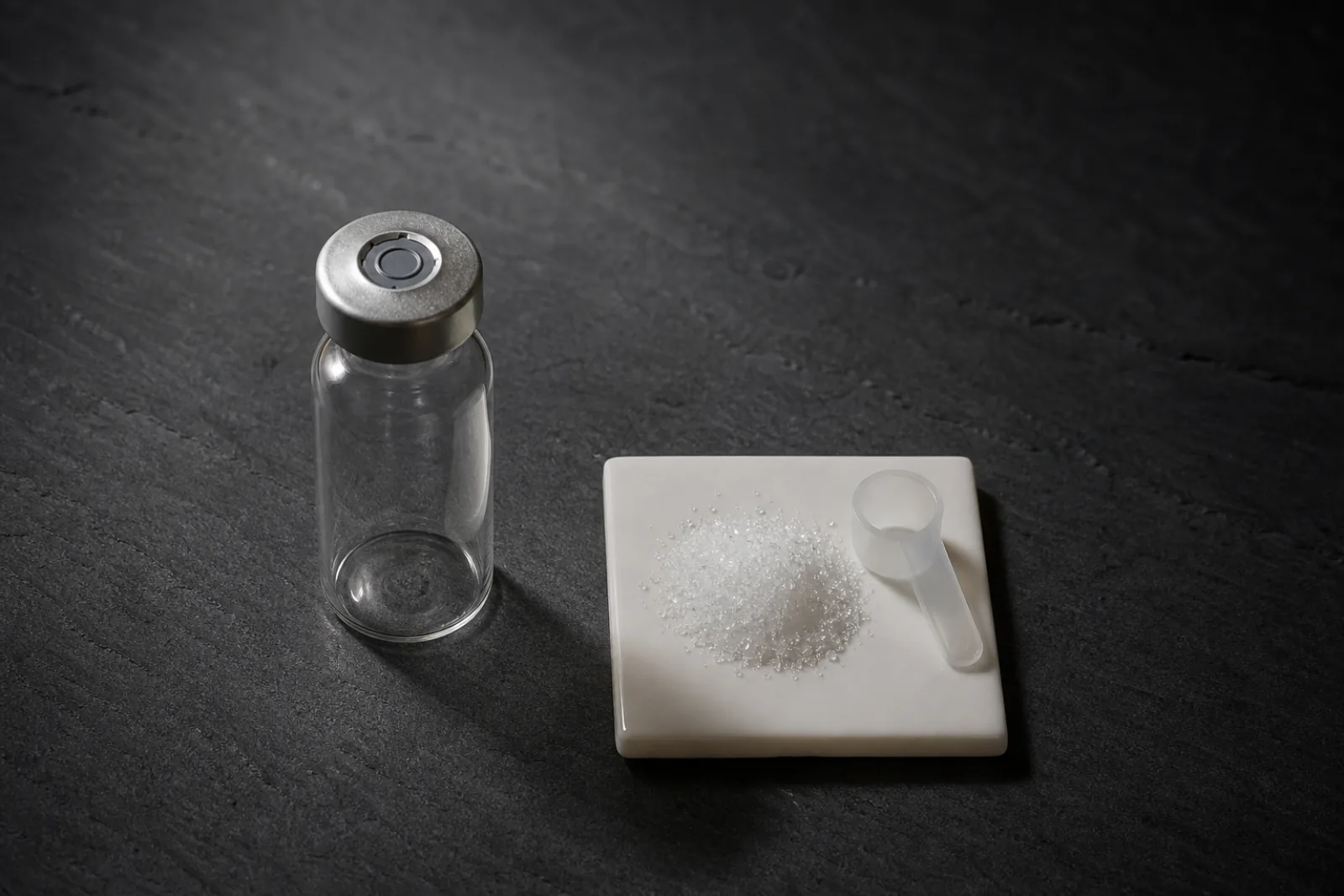 Ketamine sits across two worlds in 2026: it is on formulary as Spravato for treatment-resistant depression, and it is being supplied by the kilo through clandestine vendor pages selling 2F-NENDCK as "Canetone". The molecule overlaps; the contexts do not.
This article complements rather than duplicates two existing pieces on this site: Ketamine bladder damage: prevention and warning signs, and Ketamine and alcohol: why this mix can kill. For dose by route and weight, see the ketamine substance profile.
TL;DR
- The legal landscape changed in February 2026. The Netherlands and the United States scheduled 2F-DCK within three weeks of each other. The UK had moved in 2024, Germany in 2025. The dominant ketamine analogue of the past four years is now controlled across most of Western Europe.
- The market replacement is 2F-NENDCK ("Canetone", "CanKet"). No published human safety data, no bladder profile, longer duration, higher per-weight potency by anecdote. Vendors are selling it as a "legal alternative" — that framing is changing fast as regulators catch up.
- Ketamine deaths in the UK hit a new record in 2024, the most recent full-year ONS dataset we have. The recreational cohort got younger and bigger after the pandemic, and the chronic-harm cohort (bladder, kidneys, cognitive) is now reaching the medical system in numbers it was not staffed for.
- The pharmaceutical end of the spectrum is also growing. Esketamine (Spravato) is licensed across the EMA region for treatment-resistant depression; private ketamine-assisted therapy clinics are operating in London, Berlin, Zürich, Madrid, Vienna. The same molecule is "antidepressant medicine" in one room and "horse tranquiliser" in another, depending on whose politics you are reading.
- What to do if you use ketamine in 2026: test your sample (postal or drop-in), keep weekly intake under 1 g, never combine with alcohol or GHB, learn the early bladder warning signs, and treat 2F-NENDCK as an unknown rather than "the new 2F-DCK".
What changed in February 2026
For the four years from roughly 2021 to early 2026, 2F-DCK (2-fluorodeschloroketamine, sometimes listed as 2-Fl-2'-Oxo-PCM, occasionally sold as "Kanna" or "RKet") was the dominant ketamine analogue on the European research-chemical market. It is a fluorinated arylcyclohexylamine, structurally close to ketamine, with a similar dissociative profile, marginally lower potency by weight (recreational range roughly 80–200 mg insufflated vs ketamine's 40–150 mg) and a slightly longer subjective duration. For most of its market life it sat in a legal grey zone — not specifically scheduled in most EU member states, but increasingly subject to analogue-act prosecutions and customs interceptions.
Two regulatory moves changed that in early 2026:
- The Netherlands added 2F-DCK to List I of the Opium Act on 13 February 2026, following a recommendation by the Coordination Centre Assessment and Monitoring new drugs (CAM). The scheduling was preceded by a sustained increase in 2F-DCK seizures, including a 14 kg interception at Rotterdam port in late 2025 that the Openbaar Ministerie publicly disclosed.
- The United States DEA placed 2F-DCK on Schedule I on 6 March 2026 under emergency scheduling powers — the first arylcyclohexylamine analogue to receive emergency scheduling since 4-MeO-PCP in 2014.
Schedule and scope. The UK had already classified 2F-DCK in 2024 under the Misuse of Drugs Act. Germany followed in mid-2025 under the NpSG (Neue-psychoaktive-Stoffe-Gesetz). By March 2026 the substance was controlled in most of Western Europe, the US, Australia and Canada. France, Italy and the Nordics had been treating it under analog provisions for prosecution purposes even before formal scheduling.
Why the regulators moved when they did. A cluster of overdose deaths in Wales and northern England in late 2025, plus persistent bladder-syndrome cases that had previously been logged as "ketamine" but were increasingly being traced back to 2F-DCK in toxicology, accelerated the scheduling process. WEDINOS, the Welsh national drug-checking service, had been publishing monthly reports throughout 2025 showing 2F-DCK detection rates rising in samples submitted as "ketamine".
This is the simple part of the story. The complicated part is what happened next.
The 2F-NENDCK problem
Within six weeks of the Dutch ban, 2F-NENDCK — 2-fluoro-N-ethyl-deschloroketamine, sold under the trade names Canetone and CanKet — was the dominant ketamine-analogue listing on most major clandestine vendor platforms. Two things are worth understanding about it.
First, what we do not know. There is no published human pharmacokinetic study of 2F-NENDCK. No clinical data, no bladder profile, no interaction studies, no controlled dose-response data. The Wikipedia article is two paragraphs long and cites no peer-reviewed sources. The early user reports collected by PsychonautWiki and Erowid suggest a duration roughly 30% longer than 2F-DCK, a per-weight potency comparable or slightly higher, and a "harder" body load on come-down. These are aggregated trip reports, not pharmacology.
Second, the marketing. Vendor pages list 2F-NENDCK as a "legal alternative" to scheduled ketamine analogues, which is true in most jurisdictions in May 2026 but which is changing fast — the EUDA Early Warning System bulletin of 28 April 2026 flagged 2F-NENDCK for risk assessment, which is typically a precursor to scheduling within 12 to 18 months. Telegram channels are pricing it at roughly €4 to €7 per gram wholesale at the kilo level, about 40% of the post-ban 2F-DCK price (when 2F-DCK is even available) and roughly equal to mid-2024 ketamine wholesale.
The third thing — and this is the operational worry — is that end users are not being told what they are buying. Someone who has used "ket" for two years, has had no bladder symptoms, and trusts their dealer will be sold "ket" that is 2F-NENDCK without being told. The Loop's first-quarter 2026 festival samples report (published April 2026) showed that of 312 samples submitted as "ketamine", 22% were 2F-NENDCK, 9% were 2F-DCK (residual pre-ban stock), 4% were a mix, and only 65% were actual ketamine. The corresponding DIMS figures for Q1 2026 are within a few percentage points of these.
This matters because the safety practices a regular ketamine user has built up over years (dose, frequency, bladder-protective hydration, the awareness of when to stop) were calibrated on ketamine, not on a substance with longer duration, untested bladder behaviour and no overdose data. The week-on, day-off pattern an experienced user uses to manage their bladder is a guess when the molecule is different.
If you read one harm-reduction line from this article, read this one: test your "ketamine" in 2026, even if you have used the same dealer for years. A reagent kit will not distinguish ketamine from 2F-NENDCK reliably (the Mandelin reaction is similar for both). Only quantitative analysis — DIMS, Energy Control postal, The Loop, Saferparty, Kosmicare CheckIN! — tells you what is in the bag. See our festival drug-checking guide for the full list of services and how to use them.
The legal-medicine paradox: esketamine, Spravato and the clinic landscape
The other side of the ketamine story in 2026 is one regulators rarely tie together with the recreational picture, but it should be tied together.
Esketamine (the S-enantiomer of ketamine) was approved by the European Medicines Agency in 2019 as Spravato, an intranasal spray for treatment-resistant depression, used alongside an oral antidepressant. Five years on, it is on formulary in most EMA-region countries, dispensed through specialist psychiatric clinics. The clinical protocol is twice-weekly doses for four weeks, then weekly, then biweekly, in 56 or 84 mg doses, monitored in clinic for two hours after administration.
In parallel, a private ketamine-therapy industry has grown rapidly. The UK has roughly forty private clinics offering ketamine-assisted psychotherapy as of spring 2026 (Awakn Life Sciences, the Bristol-based Kingsley Hall clinic and several London-based providers are the largest, all CQC-registered). Germany has clinics operating in Berlin, Hamburg and Munich under §13 BtMG dispensing exemptions. Switzerland has the longest history of clinical ketamine work, with research-grade protocols running at the University of Zürich since 2017. Spain has private clinics in Madrid and Barcelona operating under a recently clarified AEMPS framework. Ireland authorised Spravato in 2024. Austria has academic-led clinics at the Medical University of Vienna.
Why this matters for the recreational user. Three reasons.
-
Diversion is rising. EUDA's 2025 annual report (published October 2025, most recent we have) shows a measurable uptick in pharmaceutical ketamine in seizure data, including S-isomer ketamine and Spravato vials, particularly in the UK, Spain and Germany. This is not the dominant supply route — most recreational ketamine in Europe is still Indian-origin pharmaceutical ketamine diverted through China and into clandestine European supply chains, or it is one of the analogues — but the new clinic-pharmacy diversion route is real and growing.
-
The cultural framing is now confused. Two things that are pharmacologically very close are being publicly described as either "antidepressant medicine" or "horse tranquiliser" depending on the speaker's politics. This affects how new users dose. Someone who has read that "ketamine therapy is medicine" may treat a 200 mg insufflated bump as a wellness intervention. The dose schedules and routes used clinically are nothing like recreational use: a clinical Spravato dose of 84 mg intranasal delivers roughly 40 mg of effective drug at moderate bioavailability and is sustained over two hours under medical supervision. A recreational 200 mg bump on a festival site is a different drug experience even though the molecule overlaps.
-
The medical system is the route for treatment if you need it. If your recreational use has become a dependency or your bladder is showing symptoms, the existence of a clinical ketamine system means you have professionals who will not flinch when you describe what you have been doing. NHS addiction services in the UK now have ketamine-specific pathways; the same is increasingly true in Germany, the Netherlands and Ireland. If you are reading this article because something has gotten away from you, that part is genuinely good news.
Country snapshot, 2026
A country-level picture of where ketamine sits in spring 2026. Same format as our festival drug-checking guide, but ketamine-specific.
United Kingdom — the centre of the European problem
The UK has had the highest per-capita ketamine use in Europe for over a decade, and that gap widened during and after the pandemic. The most recent ONS data, for full-year 2024, recorded 53 ketamine-coded deaths in England and Wales — the highest annual figure on record, and more than double the 2018 number. The cohort skewed younger: the 25–34 age band accounted for the largest share, with an unusual rise in the 18–24 cohort.
Drug-checking presence in 2026: The Loop tests ketamine samples at its monthly Bristol, Camden and Hackney clinics, plus back-of-house at festivals. WEDINOS accepts postal samples free for UK residents and publishes results publicly. As of Q1 2026, both services flag the substantial substitution rate in samples submitted as ketamine — the numbers in the previous section.
NHS pathway: the Royal London Hospital and Sunderland Royal Hospital both run ketamine-cystitis specialist clinics; self-referral via GP is open. The peer-support "Ket Quitter" network operates online and through Adfam.
Netherlands — the 3-MMC ban displaced users
The Netherlands banned 3-MMC in 2021. A significant cohort of users moved from 3-MMC to ketamine in the years that followed, and DIMS data shows ketamine submissions rising steadily through 2024 and 2025. DIMS publishes a quarterly ketamine market report; Q1 2026 shows the same 2F-NENDCK substitution pattern, with Unity and Jellinek flagging it through their socials and the live drugs-test.nl red list.
The Dutch ketamine market includes a higher proportion of crystalline product than the UK and slightly lower per-gram street pricing (roughly €20–30/g vs UK £25–35/g). The Dutch pharmaceutical-diversion picture is less pronounced than the UK's, but rising.
Germany — slowly rising, fragmented services
Germany has no national drug-checking service for ketamine, though Mind Zone (Bavaria), Eve & Rave (Berlin and Münster), Drugscouts Leipzig, Alice Frankfurt and the Berlin Vista pilot all do information and reagent work. The Berlin pilot now accepts ketamine samples; results take 5 to 10 working days.
Recreational ketamine in Germany has historically been concentrated in Berlin and the Frankfurt/Mainz axis. Pricing in early 2026 is €30–45/g at street level. The 2F-NENDCK substitution rate in the limited Berlin data is broadly comparable to The Loop's UK numbers.
Clinical ketamine: Spravato is on formulary; private ketamine-therapy clinics operate in Berlin, Hamburg, Munich, Frankfurt and Cologne.
Spain — Energy Control testing, MDMA-festival overlap
Energy Control accepts ketamine samples at all its drop-ins (Barcelona, Madrid, Mallorca, Andalusia) and via its €50 postal service for non-residents. Their Q1 2026 ketamine report flags a smaller but still meaningful 2F-NENDCK presence (around 11% of submitted samples), and slightly higher rates of cathinone adulteration in low-purity "ketamine" sold at smaller festivals.
The Spanish recreational scene overlaps significantly with the MDMA festival circuit — Sónar, Primavera Sound, BBK Live, FIB, Aquasella. Street pricing is €25–35/g.
France — limited reporting, real growth
Asud, Médecins du Monde and Techno+ operate harm-reduction services in France, but the restrictive analytic framework means there is no national drug-checking service for individual ketamine samples. Postal submission to Energy Control (Spain) or Kosmicare (Portugal) is the workaround. Anecdotal reports suggest the same analogue-substitution picture is playing out in France, but without the data infrastructure to quantify it. Our standing French primer is the Psychoactif / ASUD piece.
Ireland — HSE warnings, festival presence
The HSE Safer Nightlife team issued a public ketamine warning for the 2026 festival season explicitly referencing 2F-NENDCK substitution and the bladder-syndrome rise. PsyCare Ireland handles welfare on Irish festival sites including ketamine-related psychological emergencies; the HSE itself now runs back-of-house ketamine analysis at Electric Picnic, All Together Now, Body & Soul and Forbidden Fruit.
Switzerland — small recreational scene, established clinics
Recreational ketamine in Switzerland is relatively contained, concentrated in Zürich and Geneva nightlife. Saferparty / DIZ Zürich accepts ketamine samples at the Langstrasse and Wasserwerkstrasse drop-ins and via its mobile lab. The University of Zürich clinical ketamine work is the longest-running research-grade programme in continental Europe.
Austria — checkit! testing, contained scene
checkit! accepts ketamine samples at the homebase (Gumpendorfer Straße 8, 1060 Vienna) and at event drug checking nights. Recreational ketamine use in Austria is contained and largely Vienna-centric; the analogue substitution picture is monitored through checkit! quarterly reports.
Eastern Europe — patchier, growing
Ketamine use has historically been smaller in Eastern Europe but is rising. The Polish Monar foundation, Sananim in the Czech Republic and SZIVO in Hungary all do harm-reduction outreach; none run national analysis. Sziget in Hungary works with international harm-reduction partners on-site each year. The 2F-NENDCK picture is murkier here because there is less monitoring; treat unverified ketamine in Warsaw, Prague, Budapest as you would in Berlin or London — assume the substitution rate is in the same ballpark until proven otherwise.
What the drug-checking services are actually finding
A composite picture from the Q1 2026 reports of DIMS (Netherlands), The Loop (UK), Energy Control (Spain), Saferparty (Switzerland), checkit! (Austria) and the Berlin Vista pilot. These services do not publish identical metrics, but the picture rhymes across countries.
Substitution rates in samples submitted as "ketamine":
- True ketamine (S or racemic): 60–75%, country-dependent.
- 2F-DCK (residual pre-ban stock): 5–12%, declining month-on-month since February.
- 2F-NENDCK: 11–22%, rising fast.
- Mixed ketamine + analogue: 3–5%.
- Other adulterants (caffeine, lactose cuts, occasional cathinones, paracetamol): 2–6%.
- Misidentification (sold as ket, actually something unrelated): under 2%.
Purity of true ketamine: median 75–88% pure across services. Low purity skews towards street-level small-bag samples; higher purity correlates with crystalline product and larger-quantity purchases. Below 60% purity is uncommon in this cohort.
Combinations flagged by the consultations (services collect this information when users submit a sample): alcohol-and-ketamine is consistently the most-flagged interaction in user-reported behaviour. GHB and opioid combinations are rarer in self-reported data but feature disproportionately in the festival-medical-tent presentations. See the alcohol pharmacology piece.
Harm reduction protocol, 2026 edition
Deliberately short. The deeper guides are linked.
Sourcing and verification
- Test the sample. Drop-in or postal submission to one of the services listed above is the only way to distinguish ketamine from 2F-NENDCK reliably. Reagent kits (Mandelin gives orange to red-brown) tell you "this is probably an arylcyclohexylamine" — they do not tell you which one.
- Treat 2F-NENDCK as an unknown. If your test result comes back as 2F-NENDCK, the responsible default is to not use that sample, because there is no published bladder profile and no published interaction data. The "responsible if used at all" default is to halve the dose you would have taken of ketamine, extend the interval, and not combine with anything.
Dose
For ketamine specifically, the route-by-route dose profile is on our substance profile. The summary:
- Insufflated (the most common route): threshold 10 mg, light 20–50 mg, common 50–100 mg, strong 100–150 mg, heavy 150 mg+. K-hole onset typically at 200 mg+ in users without tolerance.
- Intramuscular: roughly 60% of the insufflated dose for the same effect; faster onset, deeper experience, considerably more risk if you misjudge.
- Oral: roughly 2.5× the insufflated dose; substantially longer come-up, more nausea, harder to titrate.
For 2F-NENDCK there are no reliable dose ranges. The provisional anecdotal cohort suggests rough parity with ketamine on a per-mg basis but with longer duration. Do not assume this is correct for your sample.
Frequency and bladder protection
Bladder-protective protocol is in our prevention guide. The headlines:
- Under 1 g per week is the threshold below which reported bladder symptoms drop dramatically. This is not a safety guarantee; it is a floor.
- Day-off pattern is more protective than total weekly amount. Five sessions of 200 mg through the week is worse than 1 g in a single Saturday followed by six dry days.
- Hydration alone is not protective at any meaningful dose; it helps, it is not a permission slip.
- Cranberry, NAC and the various supplements popular in subreddits have weak evidence behind them. Treat them as adjuncts, not solutions.
- Stop at the first sign. Early-stage ulcerative cystitis often reverses with cessation. Late-stage often does not.
Combinations
- Alcohol: do not. See why this combination can kill. The festival-medical-tent presentations from this combination are consistently in the top three causes of acute ketamine-related admissions, ahead of pure-ketamine overdose.
- GHB: do not. Two CNS depressants with mechanistically different breathing-suppression pathways. A persistent death-cluster signal in EUDA data for the past two years.
- Opioids — including pharma-style pills that might be nitazene-contaminated: do not. See our festival drug-checking guide for the 2026 nitazene picture and the France 2026 fentanyl piece for the broader opioid context.
- MDMA: the "kitty-flip" (small-dose ketamine alongside MDMA) is widely practised. Cardiac risk is real, especially at higher doses. Use is not recommended; if you do use, halve doses of both and avoid the alcohol-on-top combination above all.
- Cannabis: less acutely dangerous, but dissociation is sharply potentiated and the edges of the K-hole become harder to navigate.
The K-hole and the dose-escalation pattern
The K-hole — the dissociative-anaesthetic state at roughly 200 mg+ insufflated in users without tolerance — is a defining ketamine experience and the topic that draws a substantial share of the recreational user base. Two practical points.
First, the K-hole is dose-dependent and tolerance-sensitive. A 200 mg dose that produces a K-hole in a new user produces a "good high but not a K-hole" in a heavy user. Chasing the K-hole leads to dose escalation, which leads to bladder damage and dependency.
Second, the K-hole has to be a chosen experience, in a safe setting, with a sober buddy. Most acute ketamine medical incidents at festivals involve users who fell into a K-hole on a dance floor (where they were dragged or stepped on), in a toilet cubicle (where airway position was the problem) or in a tent (where alcohol or GHB was on top). Pick the setting before the dose, not the other way around.
Recognising dependency
Ketamine has a recognised dependency profile and the chronic-use cohort is the one that ends up in NHS clinics, German Suchthilfe services and Dutch Brijder/Tactus pathways. Signs you are entering this territory:
- Daily use, or near-daily use over months. The substance has gone from "weekend" to "background".
- Use to manage anxiety, sleep or down moods. Self-medication of a substance with a known dissociative effect is a fast path into dependence, and ketamine's antidepressant signal makes this particularly seductive.
- Bladder symptoms. Frequency, urgency, nocturia, mild discomfort on urination. These are the first signal.
- Cognitive effects between sessions. Memory slips, "ketamine-fog", reduced verbal fluency, a fuzziness that lingers into the working week.
- Tolerance escalation. The dose that worked six months ago does not work now.
- Failed attempts to cut down.
If three or more of these are present, the medical system is the route forward — not subreddits and not "I'll just stop next month". NHS Talking Therapies, German Suchthilfe, Dutch Verslavingszorg, Irish HSE Drug and Alcohol services, Spanish Servicio de Atención a las Drogodependencias — all of them now have ketamine-specific pathways. None of them will report you. All of them are free at point of use across our coverage region.
What to do when something goes wrong
Concise. The festival drug-checking guide has the longer protocol for festival-medical-tent presentations. Ketamine-specific notes:
Acute ketamine overdose (the classic K-hole gone wrong): the person is breathing but unrousable. Recovery position if you can manage it; airway clear; head turned. Vomiting and aspiration are the largest acute risks because ketamine suppresses the gag reflex. Stay with them. Call 112 if breathing is shallow, irregular or interrupted.
Ketamine + alcohol respiratory depression: this is the killer combination. If breathing falls below 10 per minute, lips are turning blue or grey, or there is gurgling/snoring that does not respond to repositioning, call 112 immediately. Naloxone does not work on ketamine. Rescue breaths until paramedics arrive.
Ketamine + opioid (nitazene risk in counterfeit pharma): if your friend has taken a "Xanax" or "oxycodone" alongside ketamine and is showing opioid-overdose signs (pinpoint pupils, very slow breathing, blue/grey lips), give naloxone immediately if you have it — one dose intranasal, second dose 2–3 minutes later if no response — call 112, rescue breaths.
Dissociative crisis (the bad-trip K-hole, severe depersonalisation, hours-long anxiety after): chill-out / welfare tent. Talk down, low light, single trusted voice, no crowd. Not a 112 call unless physical symptoms are present.
Bladder crisis (acute pain, blood in urine, complete urinary retention): A&E / Notaufnahme / urgences immediately. This is a medical emergency. The hospital will treat the bladder; they will not report your use.
FAQ
Should I stop using "ketamine" entirely because of the 2F-NENDCK risk?
That is your decision, not ours. The harm-reduction position: if you cannot or will not stop, test your sample before each batch, halve your dose on first use of a new batch, and treat any sample that comes back as 2F-NENDCK as an unknown rather than a substitute. If you stop, taper rather than cold-turkey if you have been on daily use — the rebound dysphoria can drive a return to use.
Will the new clinic-based ketamine therapy industry help me with recreational use?
Not directly. Spravato is a tightly controlled medication delivered under psychiatric supervision for treatment-resistant depression. The clinic doctors are trained on the substance but will not "prescribe you ketamine" recreationally; that is not how the licensing works, and any clinic offering this is operating outside the regulatory framework. What clinical-ketamine doctors are unusually well-positioned to do is recognise dependence patterns in a ketamine user without flinching, and refer you appropriately. If you are looking for an entry into the medical system, talking to a GP about your recreational pattern is the standard route, and they will refer onward.
Is 2F-NENDCK really that much worse than 2F-DCK?
In a strict pharmacological sense, we cannot say yet. There is no published human study comparing them. What we know:
- 2F-NENDCK has been on the market in volume for under a year; the long-tail effects (bladder, kidney, cognitive) cannot yet be assessed.
- 2F-DCK had a four-year market presence before its bladder profile became clear; the same time-curve is likely for 2F-NENDCK.
- Anecdotal user reports suggest harder come-down and longer duration. These are not toxicology.
The honest answer is that the absence of data is the danger, not the data itself. We will know more in two to three years. Some of that knowledge will come from people who used the substance through 2026 and 2027.
Is recreational ketamine "safe" if I stay under 1 g a week?
"Safe" is the wrong frame. The data show that bladder symptoms drop substantially below 1 g a week; that does not mean they drop to zero, and it says nothing about the cognitive, cardiac or dependency effects. The 1 g threshold is a harm-reduction floor, not a clean bill of health. Below it you are less likely to end up in a urology clinic; above it the curve gets steep fast.
Can I tell ketamine and 2F-NENDCK apart by taste, look or feel?
Not reliably. Crystalline 2F-NENDCK is visually similar to crystalline ketamine. The bitter taste is similar. The subjective onset and duration are reportedly slightly different but you do not know your sample's actual concentration, so "feel" is dose-by-purity confounded. Reagent testing helps narrow it ("definitely an arylcyclohexylamine") but does not distinguish the analogues from each other reliably. Quantitative analysis does.
Is veterinary ketamine the same as human-pharmaceutical ketamine?
Chemically, yes — both are racemic ketamine HCl. The veterinary supply chain is the source of a non-trivial fraction of European street ketamine (especially via Mexico and India), but the molecule is identical. Adulteration is the bigger differentiator in street samples, not "vet vs. human".
What about Special K, Calvin Klein, Granulated Kit Kat — does the slang map onto specific analogues?
No. Slang is geographic, generational and inconsistent. "Special K" in Bristol in 2024 was almost certainly true ketamine; in Manchester in 2026 the same word can mean a 2F-NENDCK sample. Slang gives you no analytic information; testing does.
Can I bring reagent kits and test strips across European borders?
Reagent kits, yes — they are not controlled in any EU country or the UK. Carry the manufacturer's documentation if possible. Standard reagent strips and fentanyl/nitazene strips are similarly uncontrolled. Ketamine itself is a controlled substance across the entire region; the testing kits are not.
What is the single best thing I can do if I have been using ketamine heavily?
Stop, or taper, and book a GP appointment with a urinary-symptoms check. The combination of cessation and an early urology consultation is the strongest predictor of bladder recovery in the long-term outcome studies. Beyond a certain point (advanced fibrotic damage), the bladder does not recover; before that point, it often does.
Should I switch to MDMA, cocaine, or something else instead?
This is a question the harm-reduction community gets often. The honest answer: substitution is not harm reduction. Every substance has its own risk profile, and "MDMA is safer than ketamine" depends on dose, frequency, combinations and pre-existing health far more than on the substance itself. If you are looking to reduce ketamine use specifically, the question is not "what should I replace it with" — it is "what does the role of ketamine in my life look like, and what is it doing for me". The answer to that is rarely a different substance.
Bottom line
Three numbers to leave you with.
60 to 75 percent: the share of "ketamine" samples submitted to European drug-checking services in spring 2026 that are actually ketamine. The rest are 2F-DCK residue, 2F-NENDCK substitution, or various adulterants and analogues.
1 gram a week: the threshold below which bladder symptoms reportedly drop sharply. This is not a permission slip. It is a floor.
Zero: the number of published human safety studies on 2F-NENDCK as of the publication date of this article.
If you use ketamine recreationally in 2026: test the sample, keep weekly intake low, avoid alcohol and GHB combinations, learn the bladder warning signs, and treat any 2F-NENDCK result as an unknown rather than a substitute. If your use has tipped from weekend into background, the medical system is the route, and the existence of a parallel medical-ketamine industry means the doctors you will speak to are unusually unflustered by the conversation.
Stay alive. Use the systems that exist.