Pink cocaine (tusi) in Europe 2026: what is actually in the pink powder
A 2026 guide to pink cocaine / tusi in Europe — why the name is misleading, what consistent blends actually contain, why street powder is the real risk, and how to use what you know to stay safer.

By summer 2026, "pink cocaine" is the drug the festival-season warnings keep naming. Irish and UK public-health agencies put "pink powders" at the top of their 2026 nightlife alerts; Spanish drug-checking services have logged it for years; it surfaced in the toxicology around several high-profile deaths. And yet what the name tells you depends entirely on where it came from. Off the street it is usually not cocaine, and often not the 2C-B that its other name ("tusi") promises — yet a genuine, well-made blend from a reputable source can absolutely contain 2C-B. It is pink because someone added dye, and that colour alone tells you nothing about what is underneath.
What pink cocaine actually is, is a blend — and that is the whole story. The honest 2026 picture is not "pink powder is poison." It is more useful than that: a consistent, verified blend is a known quantity you can dose for, while an anonymous baggie bought off a stranger at a festival is the genuine hazard. This guide is about telling those two situations apart, and what to do in each. For dose ranges by route and the pharmacology of the mixture, see the tucibi (pink cocaine) substance profile.
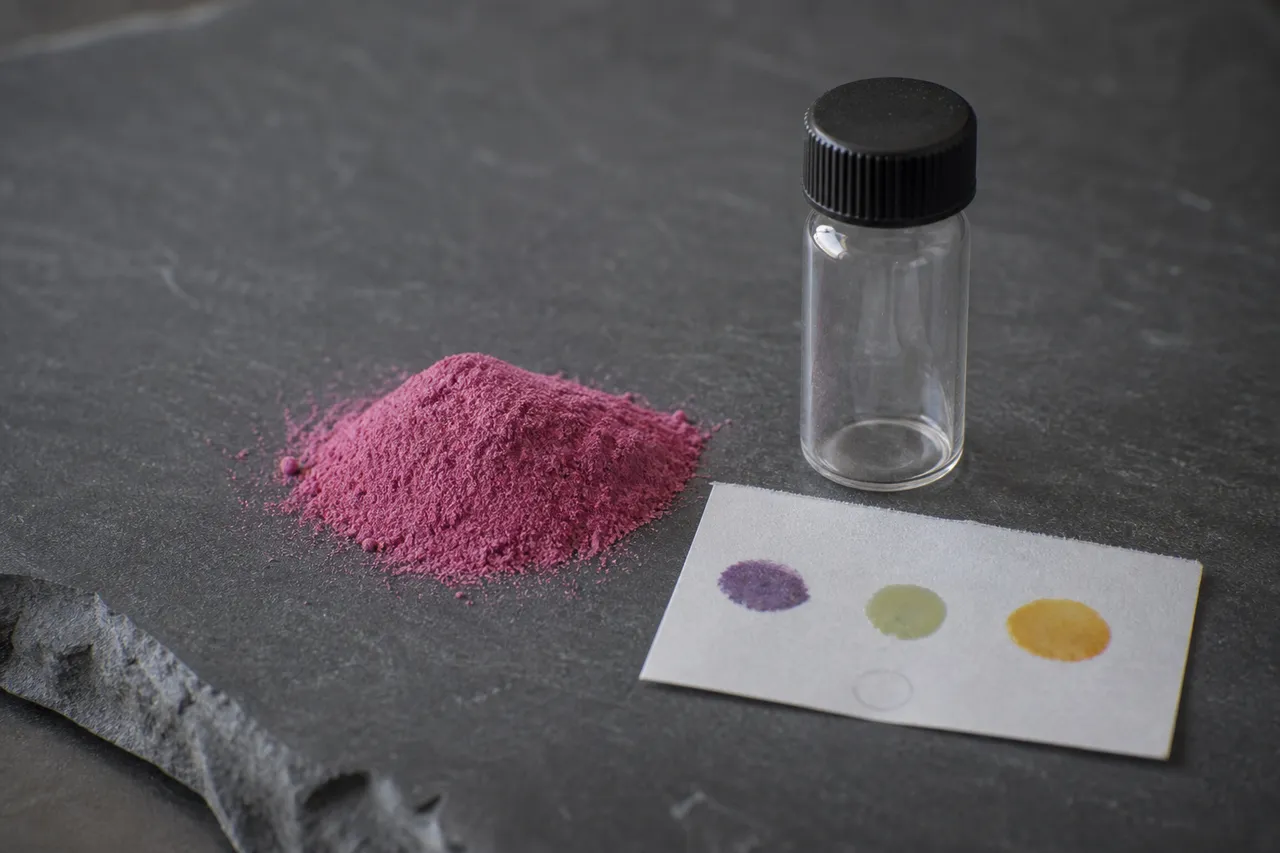 Pink cocaine is a blend, not a molecule. A reagent card can hint at what is present — a Marquis purple suggesting MDMA, for example — but it cannot tell you the ratio or rule out everything else. Only a lab can do that.
This article complements rather than duplicates the tucibi substance profile and our festival drug checking guide. Here we focus on the 2026 market: what is in circulation, the gap between a reputable blend and street powder, and the harm-reduction maths that follows from it.
TL;DR
- The name points to 2C-B — whether it is true depends on the source. "Tusi" is a Latin-American phonetic spin on "2C" (as in 2C-B). Anonymous street powder rarely contains 2C-B (or cocaine); a consistent, lab-reported blend from a reputable vendor genuinely can. Either way it is a dyed blend, not a single drug.
- A typical blend is MDMA + ketamine + caffeine, and a good one often adds 2C-B — the drug the name actually promises. Street versions may instead carry cocaine, methamphetamine or cathinones. The defining feature is that it is several drugs at once.
- The risk is not the colour — it is the unknown. A consistent blend from a reputable vendor with a current lab report is, for an experienced user, a known quantity you can dose carefully and combine sensibly. The same pink name on an unverified street baggie can contain anything, in any ratio, including potent adulterants.
- That gap is exactly why provenance matters. Drug checking removes the unknown for one specific bag; our vendor reviews exist to separate operations with consistent, lab-backed product — like Soltura, which publishes in-house test results for its tusi blend — from the ones we have flagged as dangerous or outright scams.
- What to do in 2026: find out what is actually in your powder (lab report or drug checking), dose for the strongest component you know is present, never stack it with alcohol or other depressants, and treat any anonymous "pink" with real caution.
What tusi actually is (and why the name confuses everyone)
The word "tusi" comes from the Spanish pronunciation of "2C" — the family of psychedelic phenethylamines Alexander Shulgin first described, of which 2C-B is the best known. In the late-2000s Colombian club scene, a pink, 2C-B-containing powder was branded "tusi" or "tucibí", and the name stuck.
The branding partly outlived the chemistry. As 2C-B became harder and more expensive to source, many of the people pressing and dyeing the powder kept the name and the colour but dropped the 2C-B. That is why the academic and drug-checking consensus on seized street samples — summarised in a 2025 review in Current Addiction Reports and a companion piece in the International Journal of Drug Policy — is that tusi often contains neither 2C-B nor cocaine. The US DEA reached a similar conclusion on its exhibits, where only a fraction of "pink powder" samples contained 2C-B. The key word is seized: those figures describe the anonymous, untraceable end of the market. A reputable producer making a genuine 2C-B-containing blend — and able to show a recent lab report for it — is a different animal, which is exactly why the source matters more than the label.
So three different people can say "pink cocaine" and mean three different things: a tourist expecting cocaine, an old-school psychonaut expecting 2C-B, and a chemist looking at a baggie of ketamine, MDMA and food colouring. Only the chemist is usually right. That confusion is not trivia — it is the first safety problem, because people dose and combine based on what they think they have.
What is actually in it
Drug-checking data from Spain (Energy Control, Échele Cabeza's cross-border work with Colombia), the Netherlands, the UK and the US converges on a recognisable recipe:
- Ketamine — very commonly the largest single component. Spanish lab data show ketamine concentrations in tusi rising over the years.
- MDMA — the other core ingredient; the stimulant-empathogen half of the effect.
- Caffeine — the most common bulking agent, cheap and stimulating.
- 2C-B (in the genuine blends) — the psychedelic the name actually refers to. Quality, lab-reported blends from a reputable vendor are the ones that include it; anonymous street powder is where it usually goes missing.
- Sometimes more stimulants — cocaine, methamphetamine, or synthetic cathinones ("bath salts" chemistry).
- Pink dye — cosmetic, usually food colouring; occasionally a strawberry-ish scent.
The important structural fact is in the first three bullets: a normal pink-cocaine experience is a stimulant and a dissociative taken together, plus caffeine, with the rest as garnish. That combination is what you are actually managing — not a single mystery molecule.
The two pink cocaines: consistent blend versus street powder
This is the part the scaremongering coverage skips, and it is the part that actually matters for staying safe.
There is no single "pink cocaine." There is a spectrum of provenance, and your risk is mostly determined by where on that spectrum your specific powder sits.
At one end: a consistent, deliberately formulated blend from an operation that presses the same recipe batch after batch and — increasingly in 2026 — publishes a recent laboratory analysis for it. If you know the blend is, say, MDMA and ketamine with caffeine — and, in a genuine tusi, some 2C-B — in a roughly stable ratio, and a lab report backs that up, then it stops being a mystery. It is a polydrug product you can dose for, time correctly, and combine (or refuse to combine) intelligently. For an experienced user who respects the dose, a known blend like that is potent — but it is not the russian-roulette situation the headlines imply.
At the other end: an anonymous pink baggie bought from a stranger, at a festival, on a beach in Ibiza, from a contact-of-a-contact. Same colour, same name, completely different risk. No two batches are alike. It can be over-weighted toward one component, it can contain stimulants you did not plan for, and — as Irish public-health testing flagged in 2026 — "pink powders" have occasionally been found to contain new and dangerous adulterants on top of the expected ketamine and MDMA. That is the powder that puts people in a medical tent.
The single most useful question, then, is not "is pink cocaine dangerous?" It is "do I actually know what is in this specific powder, and how consistent is the source?"
This is also why provenance is a harm-reduction tool, not a marketing nicety. A vendor that sells the same characterised blend and can show current lab work is a fundamentally different proposition from an opportunist dyeing leftover cuts pink for a markup. Our vendor reviews exist precisely to draw that line — we flag operations with a track record of consistent, lab-backed product, and we call out the ones we consider dangerous or outright scams. None of that makes any drug risk-free. It changes a total unknown into a managed risk, which is the entire point of harm reduction.
The Europe 2026 picture
Pink cocaine moved from Latin America into European nightlife over the last decade and is now firmly embedded in the festival and party-island circuit — Ibiza, the Balearics, the Greek party islands, and the larger mainland club scenes. A few threads define 2026:
- It is a named "emerging" concern again. In the 2026 all-island Ireland festival warning, harm-reduction surveys put "pink powders" at the very top of the emerging-drugs list, well ahead of anything else.
- Ketamine content is drifting up. With ketamine cheaper and more available across Europe (see our ketamine in Europe 2026 guide), the dissociative share of many blends has grown — which changes the experience and the risk profile toward heavier sedation.
- The "anything" tail is real but uncommon. The expected blend dominates, but public-health labs have flagged occasional pink samples containing cathinones, extra stimulants, or other unexpected actives. Rare is not never.
- Drug checking has it on the radar. Services like Energy Control in Spain will analyse pink-powder samples, and the broader European drug-checking network increasingly reports tusi as its own category rather than mislabelling its components.
What drug checking actually finds
When you submit "pink cocaine" to a quantitative service, the typical report comes back as a mixture with proportions — for example, "predominantly ketamine, with MDMA and caffeine," sometimes with a measured percentage for each. That is the information that makes safe-r use possible, because it tells you which component will hit hardest and which combinations you are unknowingly setting up.
A reagent kit at home is a useful first filter but a limited one. A Marquis reagent turning purple-black suggests MDMA is present; a Mandelin or other reagent can hint at ketamine. But reagents test for the presence of a class, not the ratio, and they cannot rule out everything that might also be in a multi-drug powder. For pink cocaine specifically, reagents are a screen, not an answer — see our how to test MDMA at home and reagent guide for what they can and cannot tell you. For anything you are unsure about, a lab (drop-in or postal) is the real answer.
Harm reduction: dosing a blend you understand
The logic is different from a single substance, because you are dosing several drugs at once.
- Dose for the strongest component you know is present. If a blend is ketamine-heavy, a "normal cocaine line" of pink powder can be a much bigger ketamine dose than you intend, with a dissociative onset that catches people off guard. The tucibi profile lists insufflated ranges — start low (a light dose is roughly 50–100 mg of powder, not of any single component) and wait.
- Account for the stimulant + dissociative stack. MDMA pushes you up and out; ketamine pulls you down and in. Together they mask each other's cues, which makes it easy to redose. Decide your ceiling before you start.
- Mind the MDMA load. If MDMA is a major component, the usual MDMA rules apply: hydrate sensibly (not excessively), watch body temperature, and respect the comedown. Our MDMA comedown guide applies here too.
- Never combine with alcohol or other depressants. Ketamine plus alcohol is a genuinely dangerous combination on its own — see ketamine and alcohol. Adding GHB or benzodiazepines compounds the sedation.
- Space it out, and do not use alone. A dissociative-containing blend is not something to be doing solo or while responsible for getting home.
The throughline: a blend you have characterised is one you can apply real rules to. A blend you have not is one where every one of those rules is a guess.
When something goes wrong
Most pink-cocaine emergencies are either over-sedation (the ketamine end) or stimulant overload (the MDMA/cocaine/cathinone end), and sometimes both at once.
- Heavy sedation / unresponsive but breathing: recovery position, airway clear, head turned to the side, stay with them. Ketamine suppresses the gag reflex, so vomiting and aspiration are the main acute risks. Call emergency services if breathing is shallow, irregular or stops.
- Stimulant overload (overheating, racing heart, agitation, confusion): move somewhere cool and quiet, sip water, cool the body. Seek medical help for very high temperature, chest pain, fits or a deteriorating mental state.
- Suspected unexpected adulterant / opioid signs (pinpoint pupils, very slow breathing, bluish lips): treat as a possible opioid emergency — call emergency services, give naloxone if available, rescue breaths. This is rare in pink cocaine but not impossible.
- Tell medics what was taken. "Pink cocaine / tusi, probably ketamine and MDMA" is far more useful to an emergency team than "cocaine." They will not report you.
FAQ
Is there actually 2C-B in pink cocaine?
It depends entirely on the source. Anonymous street powder often contains no 2C-B despite the name — that is what the seized-sample data shows. But a genuine, well-made blend from a reputable vendor can absolutely contain 2C-B (typically alongside MDMA, ketamine and caffeine), and the better operations will have a recent lab report to prove it. So you cannot assume 2C-B from the colour or the name — you confirm it from the source and a lab result. That is precisely why checking whether a vendor is legit matters: it is the difference between a real 2C-B blend and random dyed powder. See the 2C-B substance profile and our vendor reviews.
Does it contain cocaine?
Rarely, and rarely as the main component. Despite "cocaine" being in the street name, the core of most blends is ketamine and MDMA. Some batches do have cocaine or other stimulants added, which is one more reason the exact contents matter.
Is a consistent, lab-reported blend "safe"?
"Safe" is the wrong word for any drug. But a consistent blend with a current lab report is known, and known is dramatically lower-risk than unknown. You can dose for it, time it, and avoid bad combinations. That is the difference between a managed risk and a blind one — it is not a guarantee of safety. Even a perfectly characterised blend is still a stimulant and a dissociative taken together, which has its own ceiling.
Why does the source matter so much?
Because pink cocaine has no standard recipe, the only thing that makes one bag predictable is a producer who makes it the same way every time and can prove it. A reputable, consistent vendor turns "mystery powder" into "characterised product." An anonymous street seller does the opposite. That is the entire reason we maintain vendor reviews and flag dangerous operators — provenance is the variable you can actually control.
Can a reagent kit tell me what is in my pink cocaine?
Partially. Reagents can indicate that MDMA or ketamine is present, which is worth doing, but they cannot give you the ratio or rule out every other possible component in a multi-drug powder. For a blend, lab analysis is the real answer. Treat the reagent kit as a first screen.
A celebrity death was linked to "pink cocaine" — does that mean it is especially lethal?
The high-profile cases that put pink cocaine in the headlines generally involved multiple substances and other factors, not pink powder acting alone. The lesson is not "this one drug kills instantly" — it is that polydrug use, especially mixing stimulants and depressants (including alcohol), is where the real danger sits. That is a dosing-and-combination problem, and it is manageable with the right information.
Is pink powder from a festival baggie the same as a known blend?
No — and this is the most important answer in the FAQ. Same colour, same name, completely different risk. An anonymous festival baggie is the textbook unknown: untested, unverifiable, and the scenario behind most pink-cocaine medical incidents. If you cannot get it checked, treat it as genuinely unpredictable.
Bottom line
Three numbers worth keeping.
Two, often three: the core active drugs in a typical pink-cocaine blend are ketamine and MDMA plus caffeine — and a genuine blend adds the 2C-B the name promises. What it usually is not, off the street, is actual cocaine.
One question: "Do I actually know what is in this specific powder, and how consistent is the source?" Your risk is mostly decided by the answer.
Zero: the number of reliable conclusions you can draw from the colour pink. It tells you about dye, and nothing about dose or safety.
Pink cocaine is not uniquely evil and it is not harmless. It is a blend, and blends reward people who know what they have and punish people who guess. Find out what is in it, dose for the strongest part, keep it away from alcohol and other depressants, and use provenance — drug checking and verified vendors (see our Soltura review or the full vendor reviews) — to turn an unknown into something you can actually manage.