European Drug Report 2026: what the EUDA findings actually mean for you
The EUDA's European Drug Report 2026 landed on 9 June: record overdose deaths, nitazenes in fake pills, stronger cocaine and cannabis — and what to do about it.

On 9 June 2026, the European Union Drugs Agency (EUDA) launched its European Drug Report 2026: Trends and Developments at the European Commission in Brussels. It is the closest thing Europe has to an annual state-of-the-supply report — built from data across 29 countries (the 27 EU member states plus Norway and Türkiye) and describing the picture up to the end of 2025. If you use drugs in Europe, or you are the person your friends call when something goes wrong, this is the one report each year that is genuinely worth reading.
Most of the coverage of it will be policy language — "complex", "evolving", "preparedness". This article does something different. It takes the findings that actually change risk for a person who is going to use anyway, strips out the institutional framing, and tells you what each one means for your next weekend. The headline, in one sentence: the European drug supply is more potent, more adulterated, and more unpredictable than it was a year ago, and the single most useful response to that is to test what you have and verify where it came from.
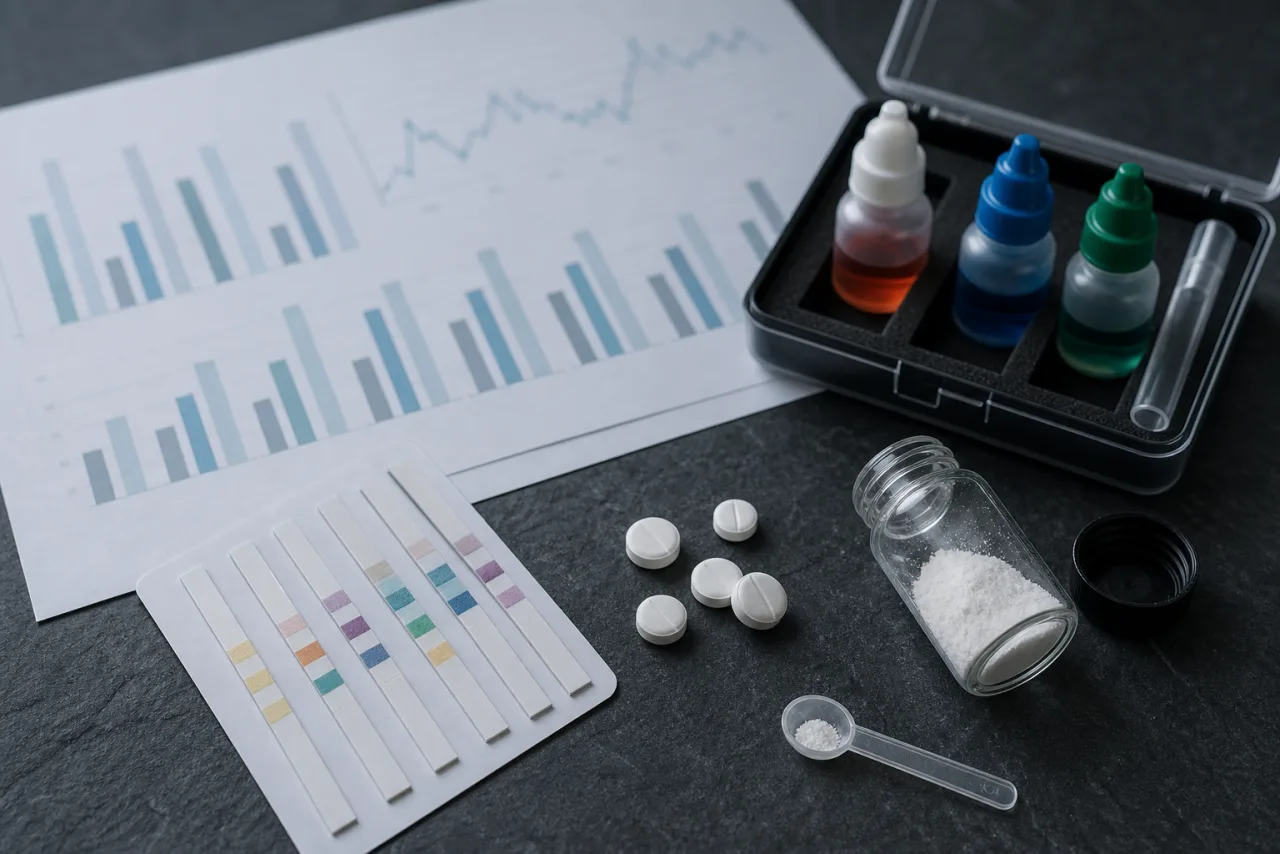 The 2026 report describes a market where what is on the label and what is in the bag have drifted further apart than ever. The tools on the right are the practical answer to the charts on the left.
This article complements rather than duplicates several recent pieces on this site. For the substances the report flags hardest, we already have deep dives: ketamine in Europe 2026, pink cocaine / tusi, the medetomidine and xylazine sedative problem, and the fentanyl picture in France. For what to actually do at an event, see the festival drug-checking guide and the reagent-testing guide.
TL;DR
- Drug-induced deaths hit a record. At least 7,600 people died from drugs in the EU in 2024 — up from 7,500 in 2023 and 7,100 in 2022. Most deaths involved more than one substance. Opioids, usually in combination, remain the biggest single driver.
- Fake medicines are the scariest new shift. More than 50,000 tablets containing nitazenes — potent synthetic opioids pressed to look like oxycodone or diazepam — were seized in 2024 by ten countries, up from 23,000 the year before and 380 in 2022. If you buy "pharma" pills off a chat app, this is your problem now.
- Cocaine is more available and purer. Around 4.3 million European adults used it last year; retail purity reached a level 44% higher than 2014. Seizure tonnage fell to 330 tonnes, but the number of seizures rose — traffickers went small and fragmented.
- Cannabis got stronger and stranger. ~24.9 million adults used it last year. High-potency extracts, edibles, semi-synthetic cannabinoids and vapes are driving hospital visits, and the EUDA issued its first-ever EU drug alert over high-potency, pesticide-contaminated North American cannabis.
- Ketamine keeps climbing, often as part of polydrug use and "pink cocaine"; treatment numbers quadrupled in five years.
- Stimulants are shifting. Methamphetamine seizures jumped to 6.1 tonnes; synthetic cathinones ("bath salts") are being mis-sold as other drugs (NEP sold as 3-MMC), causing unintended poisonings.
- The throughline: the report is, in effect, a 100-page argument for two things this site has said all along — test your drugs, and know who you are buying from.
What the report is, and what it is not
The European Drug Report is descriptive, not predictive. It pools wastewater analysis, hospital emergency data (the Euro-DEN sentinel network), drug-checking results, seizure figures, treatment entries and survey data into a single annual snapshot. Its strength is breadth; its weakness is lag — most figures are for 2024, with some 2025 signals. So treat it as the rear-view mirror, not the windscreen. When it says a trend is rising, it has almost certainly risen further by the time you read this.
A note on the framing the EUDA itself leads with this year: Europe's markets for established drugs and for new psychoactive substances are merging, and both are increasingly tangled up with diverted and fake pharmaceuticals. That single sentence explains most of what follows. The old mental model — "I know what cocaine/ketamine/Xanax is, I just need a good source" — is exactly the model the 2026 data dismantles.
1. A record number of deaths, and almost all of them polydrug
The number to sit with is 7,600 — the minimum estimate of drug-induced deaths in the EU in 2024, the highest on record and the third yearly rise in a row. The detail that matters more than the total: most of these deaths involved more than one substance. Opioids remain the group most often implicated, but usually in combination — with benzodiazepines, with alcohol, with stimulants.
What it means for you. The thing that kills is rarely a single drug taken sensibly. It is the stack: the opioid on top of the alcohol, the benzo on top of the GHB, the line of ketamine on top of a night of drinking. If you change one habit after reading this report, make it the combinations, not the substances. Our deep dives on ketamine and alcohol and the pink cocaine mixture exist precisely because polydrug is where the bodies are.
The report also notes that take-home naloxone programmes now exist in 19 European countries — but coverage is patchy. Naloxone reverses opioids, including nitazenes (you may need several doses), and it does nothing for the cocaine, ketamine or alcohol in the mix. It is still worth carrying if opioids are anywhere near your scene.
2. Fake medicines and nitazenes: the shift that should change your behaviour
If one section of the 2026 report deserves to actually change what you do, it is this one.
New synthetic opioids — overwhelmingly nitazenes, and now a newer family the report calls orphines — are appearing in counterfeit tablets pressed to look like legitimate medicines: oxycodone, diazepam (Valium-style), and other pharma. In 2024, more than 50,000 nitazene-containing tablets were seized by ten countries; in 2023 it was 23,000; in 2022 it was 380. That is not a trend line, it is a cliff. Three-quarters of EU member states have reported a nitazene in the last five years, and over a third have now reported an orphine.
Two things make this dangerous in a way that previous opioid scares were not:
- The pills look real. A pressed "blue 30" or a "Xanax bar" tells you nothing. You cannot eyeball a nitazene.
- They reach people with no opioid tolerance. The classic nitazene victim used to be someone in high-risk opioid use. The 2026 worry is the opposite population — students and recreational users buying "benzos to come down" or "oxys to sleep" from a Telegram vendor, with zero tolerance and no naloxone in the house.
There is a supply-side wrinkle worth knowing: the rise of orphines is linked to China's July 2025 blanket ban on nitazenes. Ban one family, the labs ship the next. The orphines are structurally close to brorphine, so the headline risk is the same — respiratory depression. The EUDA only began formal reviews of two of them (cychlorphine and spirochlorphine) in spring 2026, which is to say: nobody has the safety data yet.
What it means for you.
- Do not take counterfeit pharmaceutical pills you cannot verify. This is the single highest-leverage line in this whole article. If it did not come from a pharmacy, treat any "benzo" or "oxy" pill as a potential nitazene carrier.
- Use fentanyl/nitazene test strips. They are cheap, legal across the EU and UK, and detect many (not all) nitazenes. They are not a green light — they are a way to catch the worst-case before it catches you. See the reagent and strip guide.
- Have naloxone if opioids are anywhere near you, and know it may take repeat doses against nitazenes.
- For the wider designer-opioid context, our France fentanyl piece and the medetomidine/xylazine sedative explainer cover the two adjacent problems — non-opioid sedatives that naloxone will not fix, increasingly found in the same supply.
3. Cocaine: more of it, purer, and creeping into new populations
Cocaine production in South America is at an all-time high, and the report says European availability is keeping pace. The seizure data looks paradoxical at first: tonnage fell to 330 tonnes in 2024 (from 419 the year before), but the number of seizures rose. The EUDA reads this as traffickers shifting to smaller, more fragmented shipments and more varied routes to dodge the post-Ports-Alliance enforcement — not as less cocaine. Spain (124 t), France (53.5 t) and Belgium (44.6 t) alone accounted for two-thirds of the tonnage.
On the demand side: around 4.3 million European adults used cocaine in the past year. Retail purity now ranges 48–92%, with most countries between 64% and 75% — a level 44% higher than 2014, while the price has fallen. Wastewater confirms the spread: of 85 cities with data for both years, 48 (57%) showed more cocaine residue in 2025 than 2024. And the harms are scaling with it — cocaine is a leading cause of acute drug-toxicity emergencies and is implicated in roughly a quarter of drug-induced deaths in the countries with data.
The other cocaine story is crack, described as a visible and growing problem in several European cities, concentrated among marginalised groups — and notably, almost a quarter of people entering treatment for crack are women.
What it means for you.
- Higher purity is not good news, it is a dosing trap. The "normal" line you have done for years may now be substantially stronger. Re-baseline downward; the cardiovascular risk and the comedown both scale with dose.
- Adulterants still matter even at high purity — levamisole and local-anaesthetic cuts remain common. Our safer cocaine use guide and the Spanish-market piece on cocaine adulterants go into the specifics; the cocaine substance profile has dosing and interaction detail.
- Never stack it with alcohol without knowing about cocaethylene, and never with opioids or ketamine casually — cocaine was the drug most often found with ketamine in hospital toxicity data this year.
4. Cannabis: stronger, weirder, and now genuinely unpredictable
Cannabis is still Europe's most-used illicit drug — around 24.9 million adults last year, including an estimated 15.4 million young adults — and it now accounts for roughly a third of drug treatment admissions. But "cannabis" no longer means one thing. The 2026 report describes a market splitting into high-potency extracts and edibles, low-THC/CBD products, and — the genuinely worrying part — natural cannabis adulterated with synthetic cannabinoids, plus a wave of semi-synthetic cannabinoids (the HHC successors) in vapes and gummies.
Two findings stand out. First, high-potency extracts and edibles are now linked to acute toxicity presentations in hospital emergency departments — the dose-control problem with edibles is real and sending people to A&E. Second, in November 2025 the EUDA issued its first-ever alert through the European Drug Alert System, over high-potency North American cannabis contaminated with potentially hazardous pesticides, after Canadian-origin cannabis turned up by the tonne in Antwerp and Rotterdam.
What it means for you.
- Edibles: start low, wait long. Most cannabis ER visits are dose-timing errors, not contamination. An hour of "nothing" is not permission to redose.
- Be suspicious of vapes and "exotic" flower sold through grey channels — semi-synthetic cannabinoids and synthetic-cannabinoid adulteration are exactly what the report flags, and their effects are stronger and less predictable than THC. The cannabis profile has the harm-reduction basics.
- Synthetic cannabinoids are a different drug class with a real poisoning risk — if a "weed" product hits like nothing you have felt before, that is a warning sign, not a bonus.
5. Ketamine and pink cocaine: the nightlife problem the report keeps naming
The EUDA is now unambiguous that ketamine use is rising and spreading. In the 2024 European Web Survey on Drugs, 14% of last-year drug users reported using ketamine — overwhelmingly as part of polydrug nights with alcohol and stimulants. Wastewater is up in most cities with data. Treatment entries are still low in absolute terms but quadrupled over five years. And the report explicitly names "pink cocaine" (tusi/tucibi) as a context where ketamine turns up mixed with other stimulants.
One nuance the report adds, which lines up with what we wrote in our own coverage: most ketamine samples submitted to drug-checking services contained only ketamine — meaning when it is mixed into a cocktail like pink cocaine, that is often intentional, a recipe, not random contamination. Which is exactly why who makes the blend matters so much: a consistent, lab-checked product from a reputable source is a different risk proposition from anonymous street powder that can contain anything. We covered that distinction in full in the pink cocaine guide, and the tucibi profile has the breakdown.
Supply note: the report confirms most European ketamine originates from licit pharmaceutical production in India, imported in bulk (mainly via Germany) and diverted — which is the backdrop to the analogue churn (2F-DCK, then 2F-NENDCK) we mapped in the ketamine 2026 deep dive.
What it means for you.
- Bladder damage is dose-dependent and underestimated — keep weekly intake low and learn the early signs (prevention guide).
- Never combine ketamine with alcohol or GHB (why this can kill).
- Test the powder. The analogue substitution problem means "ket" is not always ketamine — see the ketamine profile and the festival testing guide.
6. Stimulants: methamphetamine up, and cathinones mis-sold as everything
Beyond cocaine, the synthetic-stimulant picture moved in 2026. Methamphetamine seizures jumped to 6.1 tonnes (from 1.8 the year before). MDMA use is broadly stable — about 2.4 million young adults last year — though wastewater hints at a slow decline, and 2024 seizures still ran to 10.7 million tablets. And amphetamine sits around 1.4 million young-adult users.
The sharper risk is synthetic cathinones ("bath salts"). The report describes them becoming established as cheap alternatives to amphetamine and cocaine, with total seized/imported volume rising to 48.5 tonnes. The problem for users is mis-selling: the EU Early Warning System flagged NEP (N-ethylnorpentedrone) being sold as 3-MMC, causing unintended consumption and poisonings, and there is a shift toward more potent compounds like alpha-PVP. Production is significant in Europe, particularly Poland.
What it means for you.
- A pill is not a dose. MDMA tablet content keeps climbing; a single press can be 200 mg+. Half, wait, and read the home MDMA testing guide.
- "3-MMC" may not be 3-MMC. If you use cathinones, reagent results and dose caution matter more than the name on the bag — see mephedrone/cathinone notes.
- Watch tablet warnings in your country's drug-checking channels (e.g. the Dutch red list).
The throughline: this report is an argument for testing and source verification
Read across all six themes and the same two words keep falling out: adulteration and unpredictability. Fake pills with nitazenes. Cannabis spiked with synthetic cannabinoids. Cathinones sold as other cathinones. Ketamine analogues sold as ketamine. The 2026 report is, functionally, the EUDA documenting a market where the label and the contents have diverged further than ever before.
There are only two responses that actually address that, and they are the two this site is built around:
- Test what you have. Drug-checking services, reagent kits and fentanyl/nitazene strips are the only way to close the gap between what you were sold and what you are about to take. The festival drug-checking guide lists the services country by country; the reagent guide covers home testing; the best reagent kits of 2026 covers what to buy.
- Know who you are buying from. When you cannot test — and often you cannot — the next best signal is provenance. A vendor with a consistent product, a track record and (ideally) published lab results is a categorically lower risk than an anonymous handoff or a fresh Telegram channel. That is the entire reason we maintain vendor reviews and scam alerts: not to endorse buying, but because if you are going to, who you buy from is one of the few risk variables you actually control.
Neither testing nor a good source makes anything "safe". They make it less unpredictable, which — in the market this report describes — is the whole game.
Harm reduction protocol: the 2026 report in eight lines
- Test it. Reagent + fentanyl/nitazene strips at minimum; a drug-checking service where one exists.
- Halve unfamiliar doses. Higher purity and stronger pills mean your old "normal" may be too much.
- No counterfeit pharma. Treat any unverified "benzo" or "oxy" pill as a possible nitazene.
- Avoid the deadly stacks. Opioids + depressants; ketamine/cocaine + alcohol; anything + GHB.
- Carry naloxone if opioids are anywhere near your scene; expect to need repeat doses.
- Start low with edibles and wait a full two hours before considering more.
- Check local warnings — your national drug-checking service publishes current alerts.
- Verify your source when you can't test; provenance is a risk control, not a detail.
FAQ
Is the European drug supply actually getting more dangerous, or is this just alarmism?
By the report's own metrics, more dangerous on the variables that matter: record deaths, higher cocaine purity, stronger cannabis products, and a sharp rise in counterfeit pills containing potent synthetic opioids. The nuance is that "danger" is concentrated in unpredictability and combinations, not in any one drug suddenly becoming poison. That is good news, because unpredictability is the thing testing and source-verification can actually reduce.
What is the single most important finding for a recreational user?
The fake-pharma/nitazene surge. Pressed pills sold as oxycodone, diazepam or "Xanax" are increasingly carrying nitazenes, and they are reaching people with no opioid tolerance. If you take pharmaceutical-looking pills you did not get from a pharmacy, this finding is aimed directly at you: verify, strip-test, carry naloxone, or don't.
Do reagent kits detect nitazenes?
Standard reagents (Marquis, Mecke, etc.) are not reliable for nitazenes. Use dedicated fentanyl/nitazene test strips, which detect many of them — though not every analogue. A negative strip lowers risk but is not a guarantee. The reagent guide explains what each test can and cannot do.
The report says cocaine purity is up. Isn't purer cocaine safer?
No — purer means stronger per line, which is a dosing and cardiovascular risk, not a safety upgrade. High purity also does not rule out adulterants like levamisole. Re-baseline your dose down and read the safer cocaine guide.
Does the report say pink cocaine is dangerous?
It names "pink cocaine"/tusi as a context where ketamine is mixed with stimulants, and notes such mixing is often intentional (a recipe). The risk depends entirely on the recipe and the maker — which is the point we made in our pink cocaine guide: a consistent, lab-checked blend from a reputable source is a very different proposition from anonymous street powder that can contain anything.
What about ketamine — should the report change how I use it?
It confirms the trends our ketamine 2026 deep dive covers: rising use, polydrug context, bladder harms, and analogue substitution. Practical upshot is unchanged — test the powder, keep weekly intake low, and never mix with alcohol or GHB.
Where can I read the report myself?
Start with the EUDA's own news release and the "key developments" page (linked in the sources below). Both are free, and the agency publishes the underlying data tables if you want to check a figure.
Bottom line
Three numbers to carry out of the 2026 report.
7,600 — the record minimum of drug-induced deaths in the EU in 2024, almost all of them polydrug. The lesson is about combinations, not any single substance.
50,000+ — counterfeit tablets containing nitazenes seized in a single year, up from 380 two years earlier. If you buy pharma pills from a chat app, this number is about you.
44% — how much higher cocaine purity is now versus 2014. Stronger is not safer; it is a reason to dose down.
The report's own conclusion is that Europe's drug market has become more complex and harder to predict. The practical translation, for anyone who is going to use anyway, is the oldest harm-reduction advice there is, now with a year of fresh evidence behind it: test what you take, know who you got it from, and never trust the label.
Sources: EUDA, European Drug Report 2026 — news release; EUDA, Understanding Europe's drug situation in 2026 — key developments; EUDA, Cocaine — the current situation in Europe; EUDA, New psychoactive substances; EUDA, MDMA and synthetic stimulants; Euronews and POLITICO launch-day coverage.